
How to Knit with the Magic Loop Technique
A popular technique for knitting very small circumference projects on circular needles—let's see how it works step by step.
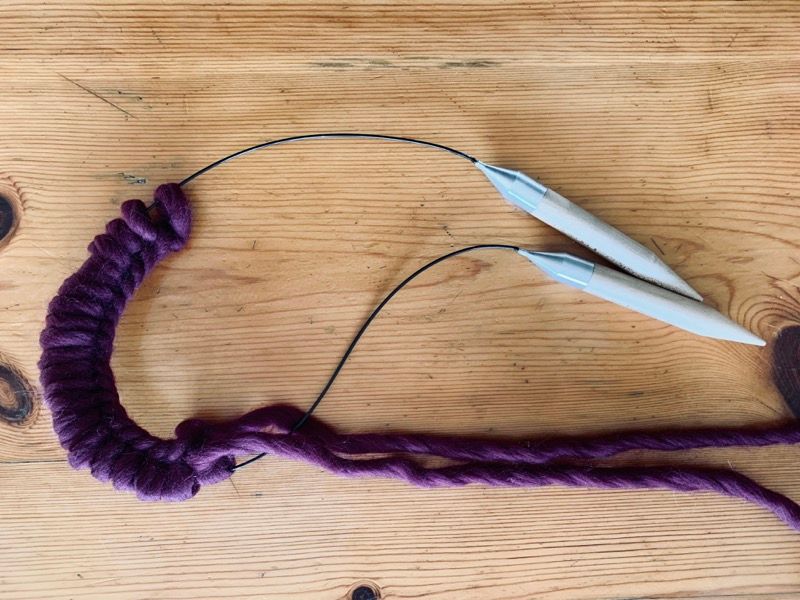
Knitting in the round with circular needles using the magic loop technique lets you use needles with a very long cable to knit small projects, or makes it easier to tackle projects that would be impossible with a traditional setup.
It replaces knitting with double-pointed needles (DPNs)—if you don't have a set on hand or don't want to buy one for a one-off project you won't make again, this is the easiest solution.
The needles you use should be at least 80/100 cm long and have a flexible cable, otherwise you'll be fighting with it the whole time!
It is possible to work the magic loop technique using shorter cables too, though it isn't always as comfortable.
If you're brand new to circular needles, try to get comfortable with the standard method first and save this slightly more involved technique for when you feel more confident.
Start by casting on the required stitches onto one of the needles and slide the stitches to the center of the cable,
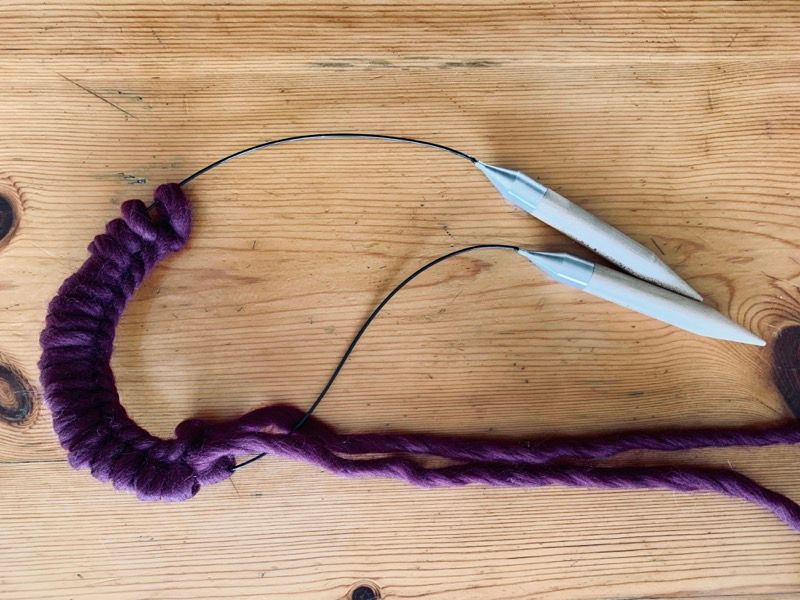
divide them in half (it doesn't matter if it's not an exact split), and place one half on one needle tip and the other half on the other.
Important! Before you start knitting them, check that your stitches aren't twisted!
The working yarn coming from the ball needs to be on the back needle—the one farthest from you—so start by knitting the stitches on the front needle.
Of course, to work these stitches you'll have to pull out the back needle, which is why you need needles with a long cable: that way the remaining stitches stay well spaced out on the loop without causing mistakes.
Once you've finished knitting the stitches on the front needle, turn your work and knit the other stitches the exact same way.
Keep going in the round, making sure you always pull out the needle on the side where the working yarn from the ball is attached.
Watch the video to see it in action!
Download the free book "From Zero to Knitter"
Learn to knit the simple way! Over 30 beginner-friendly stitches and 4 easy projects — 170 pages, free PDF.