
Needles for Knitting in the Round
There are two main types of needles for knitting in the round: circular needles and double-pointed needles (DPNs). Here is how to choose the right length and material.
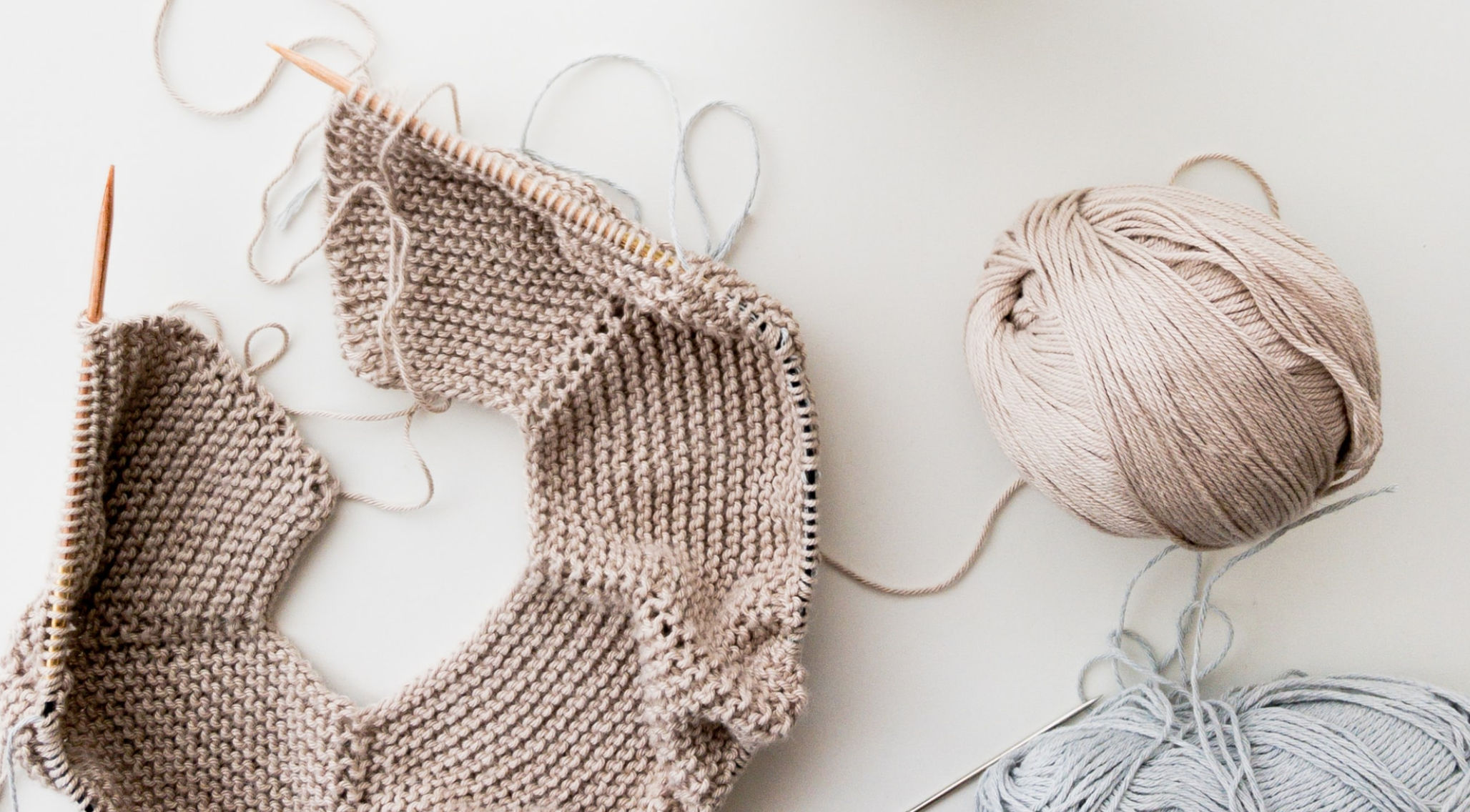
There are two types of needles for knitting in the round: circular needles and double-pointed needles (DPNs).
Circular needles have a flexible cable connecting the two needle tips.
They are designed to be used on their own to knit a tube that fits comfortably around them, though they can also be used in other ways—even alongside other needles.
Double-pointed needles are straight and rigid with points at both ends, and they are usually sold and used in sets of four or five, though there are ways to knit in the round using just three.
Both types of needles come in different thicknesses and lengths.
Double-pointed needles are normally between 13 cm and 20 cm long (about 5 to 8 inches), although some manufacturers also make them in 10, 25, or 40 cm lengths.
Circular needles are typically sold in lengths ranging from 40 cm to 100 cm, though both shorter and longer versions are available as well.
You can also find circular needles sold in interchangeable sets, with cables of various lengths and needle tips in different sizes.
An interchangeable circular needle set is something I wholeheartedly recommend if you love knitting in the round, because it saves you a good amount of money in the long run!
When used in the traditional way, the shortest circular needles (under 40 cm) are great for knitting socks, mittens, baby hats, or sleeves for a child's sweater, for example.
40 cm circulars are usually used for adult sweater sleeves and hats.
Medium-to-long circulars are used for the body of sweaters, depending on whether you're making a child's or an adult's garment.
The longest circular needles (120 cm or more) are used for knitting blankets and shawls, or for working small-circumference projects with the technique known as Magic Loop.
Double-pointed needles can be used for any size tube you want to knit, as long as the circumference isn't so wide that your stitches start slipping off the ends.
The shorter DPNs, for instance, are ideal for socks, gloves, and wrist warmers because they are much easier to maneuver on small projects.
Needles that are 18–20 cm long are perfect for hats and sleeves, while 40 cm DPNs have become increasingly rare, having largely been replaced by the much handier and more practical circular needles that do the very same job.
Both needle types can be made from a variety of materials (wood, bamboo, steel, plastic, and more).
Whether to buy wooden needles or steel ones is completely a matter of personal preference—it mostly comes down to how smoothly you like your yarn to glide along the needle.
Download the free book "From Zero to Knitter"
Learn to knit the simple way! Over 30 beginner-friendly stitches and 4 easy projects — 170 pages, free PDF.