
Where Does the Fair Isle Knitting Technique Come From?
How is a Fair Isle sweater knitted, and where did this distinctive stranded colorwork technique originate?
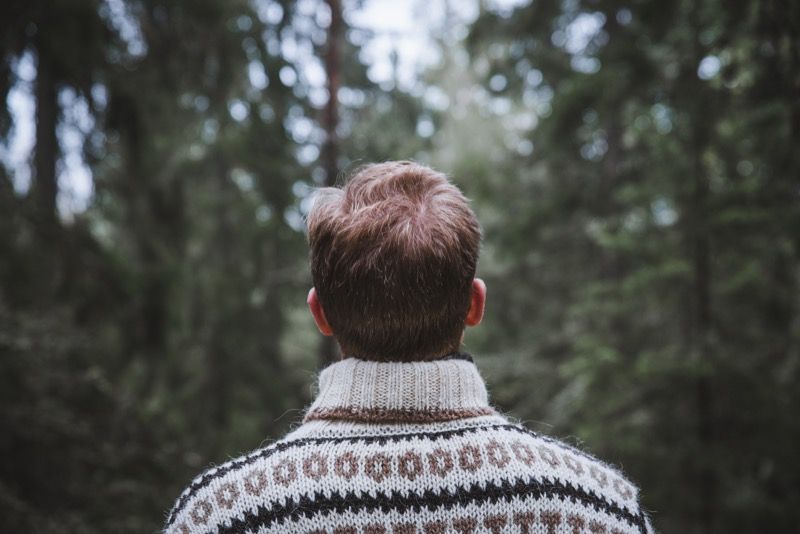
Fair Isle is a tiny island in the Shetlands, north of Scotland, with very few inhabitants (around sixty or so), and it gives its name to one of the most popular and beautiful knitting techniques, which originated right on the island.
In the 19th century, the local women began knitting with the wool from the island’s sheep—Shetland wool, which is very lightweight and very warm—to make sweaters that would keep the islanders warm, mostly shepherds and fishermen.
The sweaters were knitted in the round using double-pointed needles (replaced today by circular needles), often with a perforated leather belt (a knitting belt) to support the weight of the garment and let the knitter set the project aside while keeping it close at hand.
Once finished, the sweater was laid out in the open air so that the wind and rain would lightly felt it, making it even warmer and more durable.
Geometric motifs such as circles, diamonds, crosses, and other shapes are worked inside horizontal bands, using no more than 2 or 3 colors per round or row; color changes happen every 4–5 stitches so that the floats carried across the wrong side of the work do not become too long. These bands alternate all across the sweater, including the sleeves, creating vibrant, colorful patterns. The total number of colors used is never more than 5.
The sweater is knitted bottom up on circular needles as a single tube, while the armholes and neckline are cut (steeked) after being reinforced by hand or with a sewing machine.
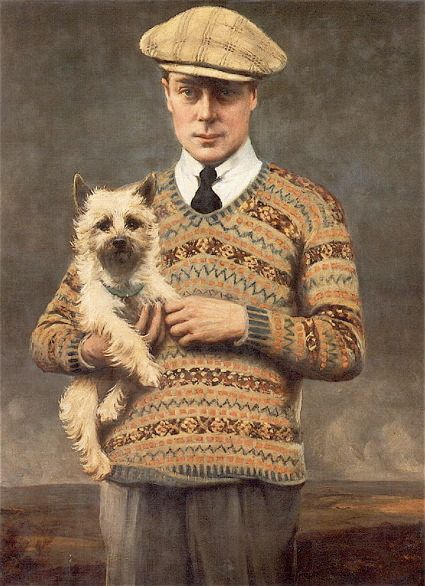
Over time, the sweaters were also used for barter, and the style became famous around the 1920s when King Edward VIII, then the Prince of Wales, wore a casual sweater featuring the pattern.
The Fair Isle technique requires knowing how to knit (on circular needles, stockinette stitch is worked simply by knitting every stitch) and how to work with two colors at a time, alternating them.
Download the free book "From Zero to Knitter"
Learn to knit the simple way! Over 30 beginner-friendly stitches and 4 easy projects — 170 pages, free PDF.